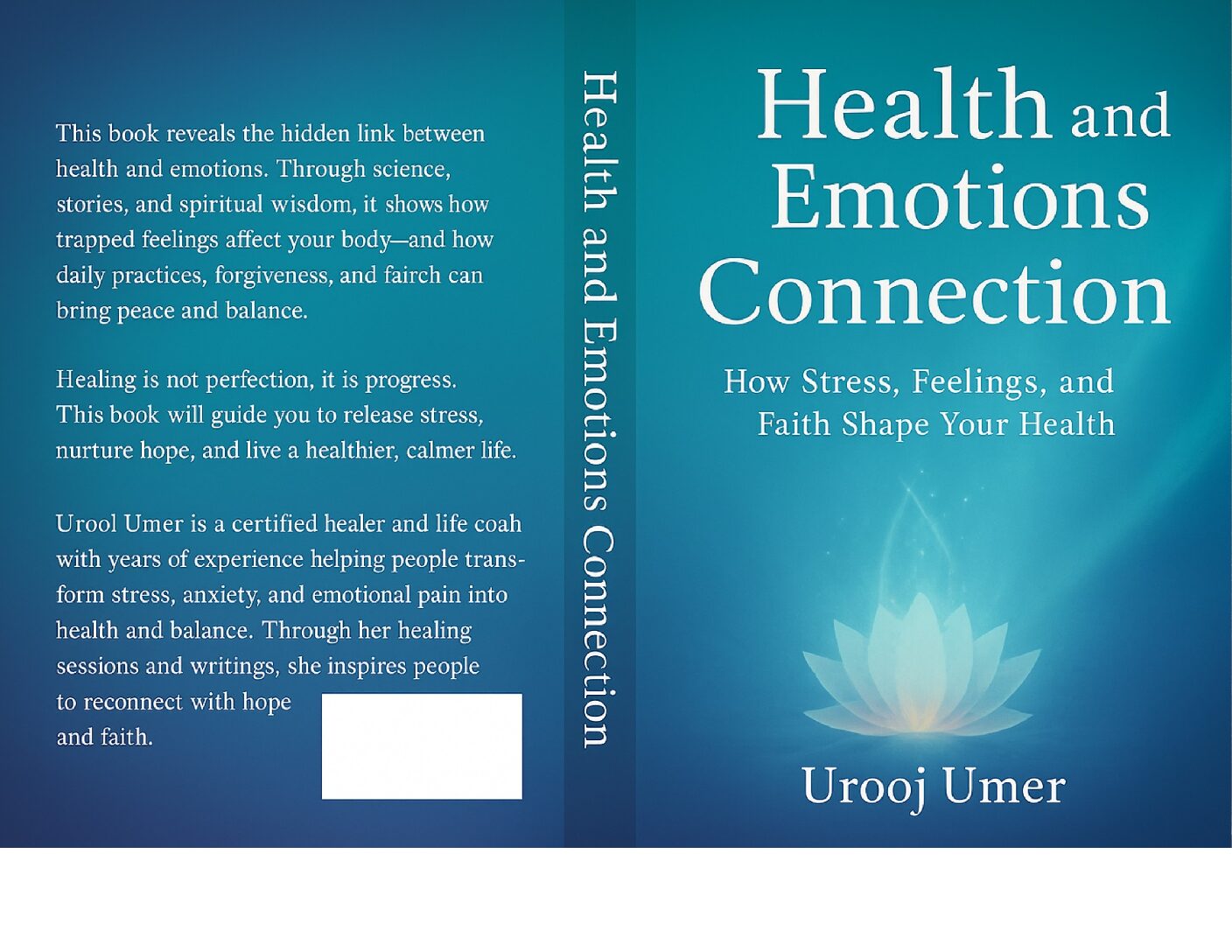
This book is a journey into the hidden connection between health and emotions. It shows how the body and mind are not separate but woven together, and how unspoken feelings can shape illness, stress, and even relationships. Inspired by science, real-life stories, and faith, it offers both knowledge and tools for deep emotional healing.
The opening chapters define health not only as the absence of disease but as balance in body, mind, and spirit. Readers discover how stress and emotions silently influence immunity, energy, and daily well-being. Through personal stories — from unexplained back pain to chronic headaches — the book reveals how many physical struggles carry emotional roots.
The science of stress and emotions is explained in simple yet detailed language. The limbic system, hormones like cortisol and dopamine, and the body’s physical responses show that emotions are not random. Fear, anger, sadness, and joy each play roles in survival — but when ignored, they become “trapped” and burden the body.
Chapters on emotional release introduce healing methods such as journaling, breathing, forgiveness, movement, and the Emotion Code. Readers learn safe ways to release suppressed feelings and feel lighter. Case studies highlight how clients found relief from years of anxiety, grief, and anger by addressing their emotional patterns.
Relationships are explored deeply. The book shows how unspoken emotions build walls between partners, parents, and children, and how compassion and vulnerability rebuild trust. A section on generational emotions explains how trauma, fear, and guilt pass silently from parents to children, and how healing oneself can free future generations.
Daily practices form the heart of integration: morning check-ins, gratitude journaling, evening reflections, 3×3 breathing, movement, and prayer. Worksheets and tracking charts make healing practical. Readers are invited to use these tools like mirrors, not exams — to see patterns, reflect honestly, and grow steadily.
Faith and spirituality are woven throughout. The book honors prayer, meditation, forgiveness, and service as powerful partners to science. Real-life stories show how turning to God in moments of grief transforms despair into hope. The message is clear: medical care and spiritual care can walk hand in hand.
The final chapters emphasize long-term healing. Integration means making emotional care a lifestyle — not perfection, but persistence. Readers are reminded that even small daily steps create lasting balance.
The book closes with a heartfelt blessing:
May your body be healthy.
May your heart find peace.
May your soul feel loved.
May your family inherit healing, not pain.
It ends with a reminder that healing is not the absence of pain, but the presence of strength, faith, and hope.